

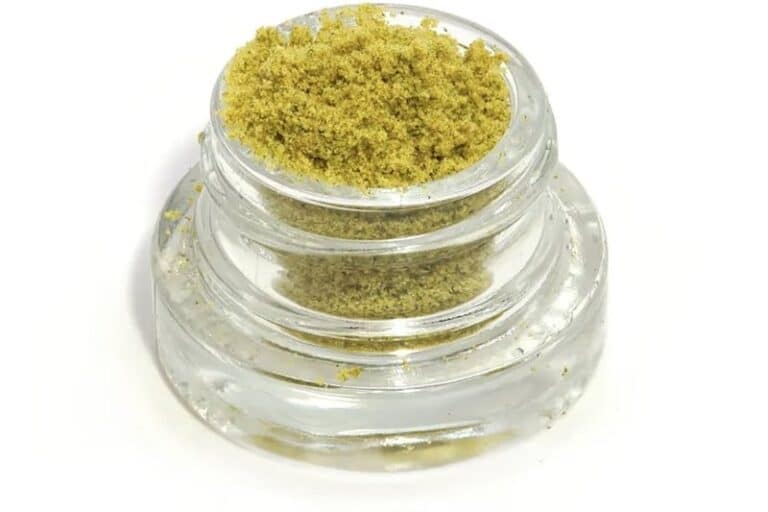
Long before anyone was making shatter or live rosin, people were making hash. It is one of the oldest cannabis concentrates around, and it is still one of the simplest. If you have ever wondered what that dark, crumbly or sticky block in the concentrate case actually is, here is the plain-English version.
Hash Is Made From Trichomes
Look closely at a good cannabis flower and you will see it is covered in tiny, sparkly crystals. Those are trichomes, little resin glands that hold most of the plant’s cannabinoids and terpenes. We have a full post coming in December on what trichomes tell you about flower quality.
Hash is simply those trichomes, separated from the plant and pressed together. Take away the leaf and the stem, collect the resin, and compress it. That is hash.
Hash vs Kief
If you have a three-chamber grinder, you have probably seen a fine powder collect in the bottom. That powder is kief, and it is loose trichomes. So kief and hash are made of the same thing. The difference is that hash has been pressed and, often, worked with gentle heat, so it holds together as a solid piece. Our post on what kief is goes deeper on the loose stuff.
And hash is not the same as hash oil, which is a liquid or sticky extract made a different way. We cover that in what is hash oil.
The Main Ways Hash Is Made
There are a few traditional methods, and each one gives a different look and feel.
Dry sift hash is made by sifting dried plant material through a series of fine screens. The trichomes fall through, the plant matter stays behind, and the collected resin is pressed.
Ice water hash, often called bubble hash, uses ice and cold water to make the trichomes brittle so they snap off the plant. The resin is filtered through mesh bags, then dried. Bubble hash is also the starting point for rosin, which we explained in our post on live resin vs live rosin.
Hand-rubbed hash, sometimes called charas, is made by rubbing living plants between the palms and collecting the resin that builds up on the hands. It is a very old, very labor-intensive method.
Pressed hash is what you get when any of these is compressed with pressure and gentle heat into a block, a slab or a ball.
What Are Temple Balls?
Temple balls are a traditional style of hash that is rolled and worked by hand into a smooth sphere, then often cured for a while. People who love them talk about how the flavor deepens as they age. They are more of a specialty item than an everyday one, so if you see them on a menu, it is worth asking about.
How People Smoke Hash
Hash is versatile, and there are a few common ways to use it.
Crumbled on top of a bowl is probably the most popular. Break off a tiny piece, warm it slightly between your fingers if it is firm, crumble it over flower in a pipe or bong, and light as usual. The flower helps the hash burn evenly. If you are new to pipes, our guide on how to pack a bowl covers the basics.
Rolled into a joint is another classic. Some people roll a thin “snake” of soft hash and lay it in the middle of the flower before rolling. Our post on how to roll a joint shows you the rolling part.
High-quality, full-melt bubble hash can also be dabbed, because it melts cleanly with very little residue. Lower grades are better crumbled or rolled.
Whatever way you choose, start with a small amount. Hash is a concentrate, which means it is a lot stronger than the flower it came from. A little goes a long way.
How to Tell Good Hash
Color varies a lot depending on the method and the starting material, so it is not a perfect guide on its own. In general, people look for a strong, pleasant aroma when it is warmed slightly, a texture that softens with a little body heat, and a clean melt without a lot of black, harsh residue. Very hard, odorless hash that does not soften is usually a sign it is old or low grade.
Your nose is the best tool you have. Good hash smells like the plant, often in a richer, spicier way.
How to Store Hash
Hash keeps well compared with a lot of other concentrates, but it still does best in a sealed container somewhere cool and dark. Keep it in the child-resistant packaging it came in, away from heat and light, and out of reach of kids and pets. Colorado’s official cannabis site recommends keeping all cannabis products in child-resistant packaging, clearly labeled and locked up.
Is Hash Stronger Than Flower?
Generally, yes. Because hash is made by concentrating the resin and leaving the plant material behind, a small piece of hash usually carries a lot more THC than the same weight of flower. Exactly how much depends on the method and the starting material, and the product label lists the potency, so read it before you use it. That difference in strength is the reason we keep saying a little goes a long way.
Questions to Ask at the Counter
If you are shopping for hash for the first time, a few questions will get you a lot of useful information fast. Ask how it was made, since dry sift, bubble and pressed hash all behave differently in a bowl or a joint. Ask whether it is best crumbled, rolled or dabbed. And ask how firm it is, because a soft, pliable hash and a hard block need slightly different handling.
Hash at Lit
At Lit, the hash on our shelves comes from outside vendors we trust, while the flower we sell is grown by us. Check our extracts page for what is in the case right now, and ask a budtender at Federal or Broadway to show you the differences in person. Seeing and smelling a few side by side teaches you more than any article.
A note on concentrates. Concentrates are much stronger than flower. Overconsumption of marijuana concentrate carries potential risks, including: psychotic symptoms and/or psychotic disorder (delusions, hallucinations, or difficulty distinguishing reality); mental health symptoms/problems; Cannabis Hyperemesis Syndrome (CHS) (uncontrolled and repetitive vomiting); and cannabis use disorder/dependence, including physical and psychological dependence. Start low, go slow, and ask a budtender if you have questions. For adults 21 and older.
And as always, enjoy it somewhere private. Colorado does not allow cannabis use in public places.
